
CCTV Installation
Plan camera coverage around entrances, blind spots and the details you need to capture.
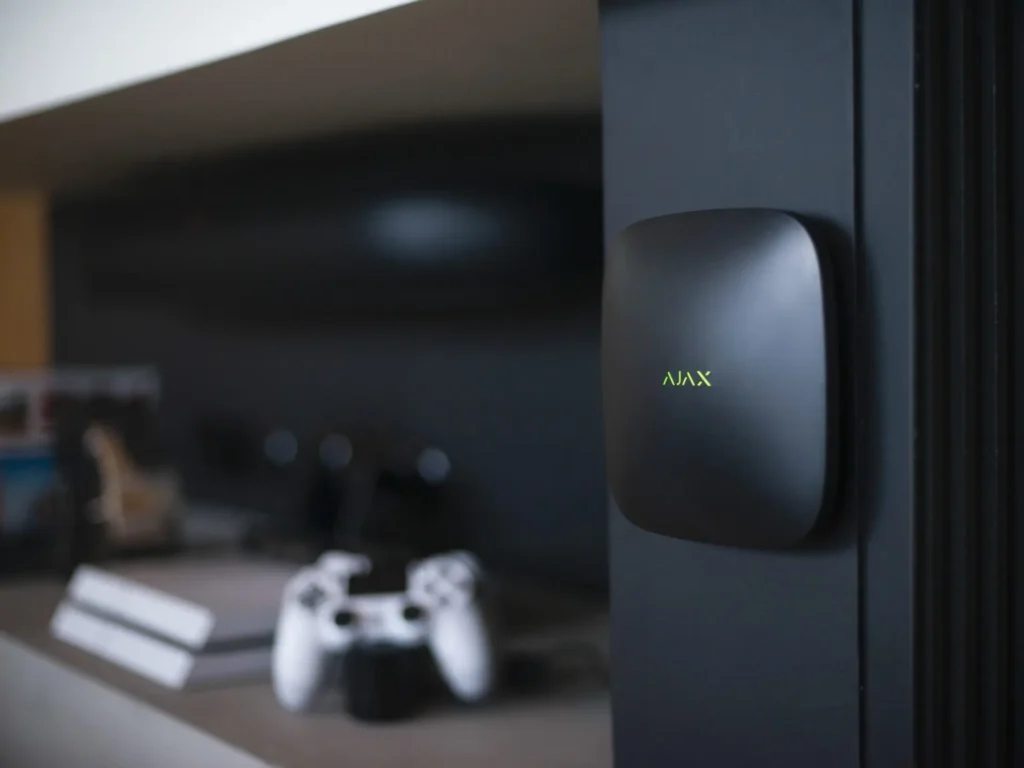

An alarm system detects what is happening at your property. Monitoring adds the off-site layer that receives those events and makes sure they are handled according to a defined response plan, even when nobody is on site.
For a business, managed property, or higher-risk location, that can include much more than a basic burglary alarm. Different sensors can report intrusion, duress, environmental conditions, and technical problems through the same monitored system.
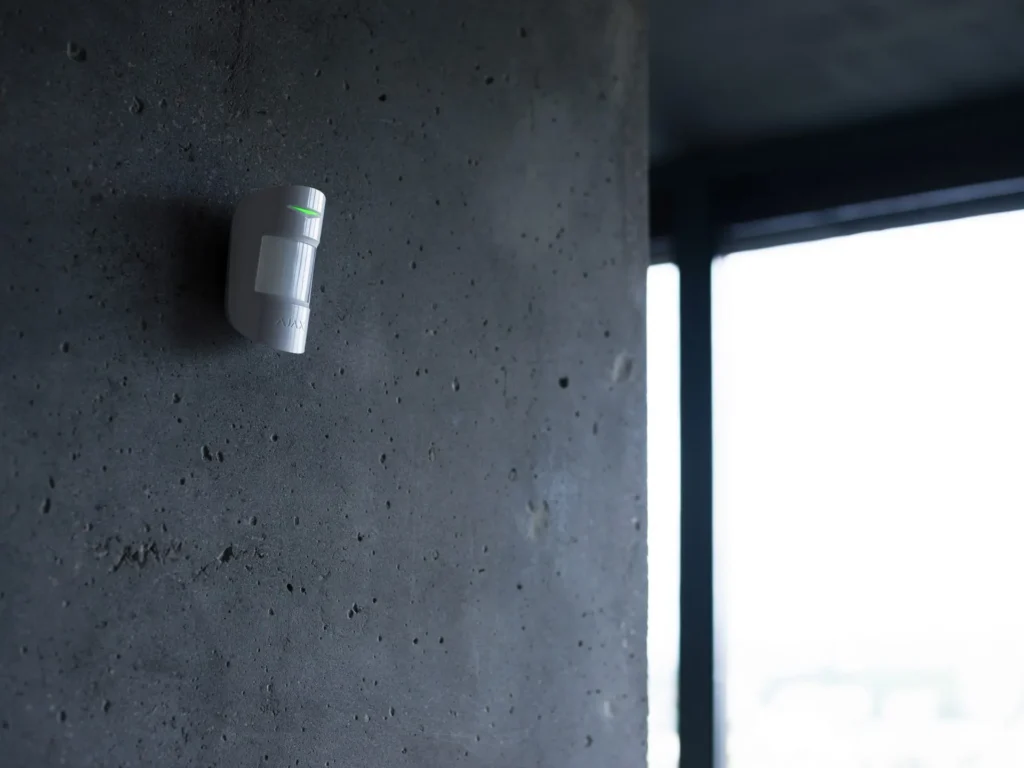
Motion and intrusion detectors report activity in protected areas, helping identify unexpected movement that may require review, verification, or response.
Door and window contacts report openings, forced movement, or unexpected access when protected areas are armed or scheduled for closure.
Acoustic or shock sensors can identify broken glass or impact at vulnerable openings, adding detection before an intruder moves inside.
Panic buttons and duress inputs send high-priority alerts when someone needs immediate assistance without relying on automatic motion detection alone.
Compatible leak, temperature, smoke, carbon monoxide, or other sensors can report hazards alongside security events when properly configured and monitored.
The panel can report low batteries, communication failures, tampering, or device faults so technical problems are not silently ignored locally.
Good monitoring is not simply a control panel sending an alarm. What matters is what information reaches the monitoring station, how reliably it gets there, how the event is classified, and what should happen next.
That logic is configured before an incident occurs. When an actual event happens, the system already knows which zone triggered, what type of signal was received, and which response procedure applies.
The right monitored alarm system depends less on the number of devices than on what needs to be detected, what normal activity looks like, and what should happen when something goes wrong. TNSG designs these rules around the property rather than applying the same alarm package to every site.
Alarm monitoring becomes more useful when other security technologies provide additional context or help the system remain available during a failure. It does not replace CCTV, access control, or network infrastructure; each technology solves a different part of the security problem.
Where integration is appropriate, the monitored alarm becomes a response layer connecting selected events from those systems to predefined actions.
The questions below cover practical details that often become important after the basic alarm design has been established. They also explain where monitoring technology, local response procedures, existing equipment, and Canadian standards affect the final system.
Yes. Modern alarm systems can transmit events through IP connections, cellular networks, or a combination of communication paths, depending on the control panel and monitoring configuration.
Using more than one independent path can reduce reliance on a single internet provider or carrier. For example, current professional alarm platforms are available with Ethernet and cellular communication and can switch between configured channels when one becomes unavailable.
A landline should therefore not be treated as a default requirement. The communication method should instead be selected around network availability, cellular coverage, site risk, monitoring compatibility, and the level of redundancy the property requires.
An internet outage does not necessarily disconnect a properly designed monitored alarm system. If cellular backup is configured, compatible panels can continue transmitting alarms through the alternate connection when the primary IP path fails.
Power failure is handled separately. The control panel and critical communication equipment need appropriate battery or backup power, and the available runtime depends on the equipment and system design.
Power loss, low battery conditions, communication failures, and similar faults can also be transmitted as trouble events. This matters because a monitored system should tell you that protection is becoming degraded rather than simply stop communicating.
Often, but not automatically. An existing panel, hardwired zones, wireless detectors, contacts, sirens, and keypads may still be usable if the equipment is compatible, supported, correctly installed, and in reliable condition.
A takeover assessment should identify the control panel model, existing zones, device condition, backup battery, communication technology, programming access, and monitoring protocol. Older telephone-only communicators are often the part of an otherwise usable system that most needs modernization.
In some properties, keeping good existing field devices while replacing the control and communication layer makes more technical and financial sense than replacing everything.
ULC monitoring is more specific than simply describing equipment as professional or certified. CAN/ULC-S301 addresses signal receiving centre configurations and operations, while CAN/ULC-S302 addresses installation, inspection, and testing of intrusion alarm systems.
A ULC certificate may be required by an insurer, contract, authority, security specification, or particular risk classification rather than being mandatory for every ordinary alarm installation. ULC certificates can only be issued through companies listed for the applicable service.
If your property has a specific insurance or compliance requirement, confirm it before selecting the equipment and monitoring arrangement. Changing the service structure after installation can be considerably more complicated than designing for the requirement from the beginning.
No. A monitoring station follows the response and verification procedures applicable to the event and the local police jurisdiction rather than automatically requesting police attendance for every sensor activation.
Toronto Police requires break-and-enter alarm signals to be verified before a request for police attendance is made. York Regional Police also uses a Verified Alarm Response Program and identifies methods such as audio, video, or multiple alarm activations as possible verification information.
Police response can also depend on the nature and priority of the call and available resources. This is why a commercial alarm monitoring plan should be designed around the actual local response policy instead of assuming that every alarm produces an immediate police dispatch.
Some security platforms can receive signals from compatible smoke, carbon monoxide, heat, or other life-safety detectors. That does not mean ordinary intrusion alarm monitoring automatically satisfies requirements for a code-required building fire alarm system.
Where the Ontario Fire Code requires a fire alarm system to be monitored and central-station monitoring is used, the owner must obtain documentation showing that the monitoring service complies with the standards referenced by the Code, including CAN/ULC-S561 or the other applicable referenced standard.
UL Solutions likewise treats intrusion alarm monitoring and fire protective signalling as separate programs with different applicable standards.
For that reason, fire monitoring requirements should always be confirmed for the particular building rather than assumed from the capabilities of a security alarm panel.
Yes. A properly configured platform can bring several properties into one management environment while keeping each site operationally separate.
Each location can have its own zones, user permissions, arming schedules, notification settings, contacts, and response instructions. This is useful for businesses managing several offices, retail locations, warehouses, construction facilities, or other distributed properties.
Centralized management should not mean identical security rules everywhere. Each property still needs its own risk assessment and response logic because operating hours, layouts, staff access, local conditions, and police procedures may differ.
False alarms are not only a nuisance. Depending on the police jurisdiction, unnecessary dispatches can result in fees or restrictions, which is one reason Toronto, York Region, and other Ontario police services place significant emphasis on verification and proper alarm operation.
Routine maintenance should include device testing, battery and communication checks, inspection of door and window contacts, review of detector positioning, and confirmation that the monitoring station has current keyholder information. Users also need to understand arming, disarming, panic functions, and cancellation procedures.
Changes to shelving, equipment, HVAC airflow, renovation work, operating hours, staff access, or the physical use of a protected area can change how detectors behave. After meaningful changes, the affected zones should be reviewed and tested rather than assuming the original configuration still works correctly.
Testing should always be coordinated with the monitoring provider so test signals are recognized as tests instead of real emergencies.
Security technologies are often more effective when they work together. Depending on the property and the risks involved, this solution may be combined with other systems.
A single technology may address one part of a security challenge, but effective protection often depends on how different systems, property conditions and operational needs work together. Explore our comprehensive security services for a broader approach to planning, improving or evaluating your property.
Tell us about the property, your current concerns and what you would like to improve. Our team will review the details and help determine the most appropriate next step, whether you need a new system, an upgrade or a professional assessment.
For technical support with an existing TNSG system, please visit our Help Center.