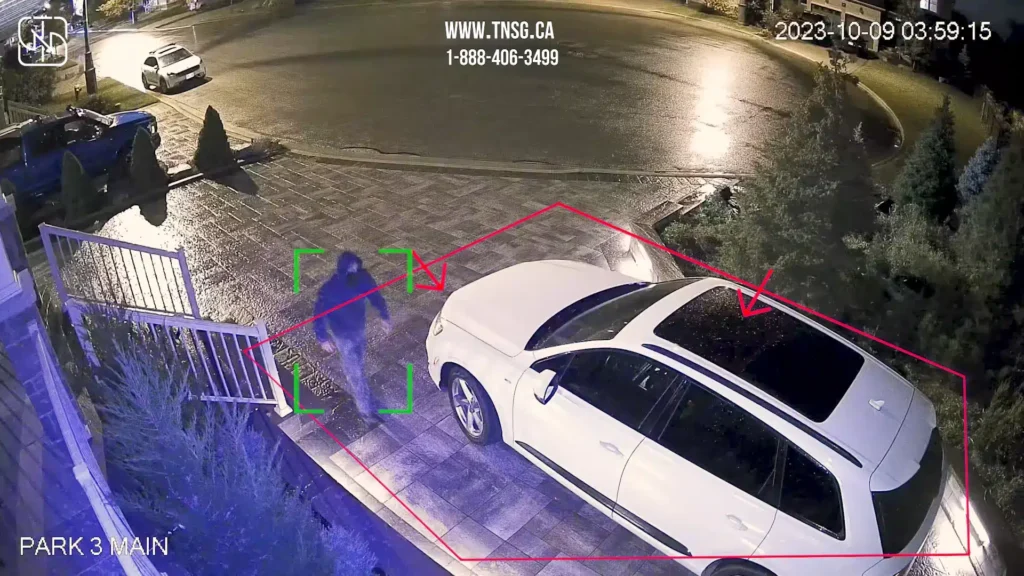
A business owner notices repeated activity near a rear entrance and installs several cameras. The video looks clear on a phone, motion alerts are enabled, and the property now appears protected.
A few weeks later, an incident occurs. The cameras record a person approaching the building, but the face is too small to identify. A vehicle appears in the frame, but the licence plate is unreadable. The alert arrives after the person has left, and nobody knows who was expected to respond.
Nothing was technically broken. The cameras recorded exactly what they had been positioned to record. The problem was that the security system had never been designed around the result the business needed.
This gap between owning security equipment and having effective protection is where many costly mistakes begin. TNSG Insights examines the decisions, limitations, and practical details that are easy to miss before an incident exposes them.
Why Security System Design Matters More Than the Number of Devices
Security equipment is easy to buy online. Product pages compare resolution, storage, night vision, detection range, mobile access, and customer ratings.
What those pages cannot tell you is whether the equipment will solve the problem at your property.
A camera selected to provide a wide overview may show that someone entered a parking lot without providing enough detail to identify the person. A camera that performs well during the day may struggle with headlights, glare, shadows, rain, or low light. Motion alerts may sound useful until routine activity produces so many notifications that you stop paying attention.
The same principle applies to access control and alarm systems. A card reader can unlock a door, but it does not determine who should enter each area or when access should expire. An alarm can activate a siren, but it does not decide how the event will be verified, who should be contacted, or what action should follow.
A product performs a function. A security system must produce an outcome.
That outcome may be deterrence, early detection, identification, controlled access, usable evidence, remote intervention, or a coordinated response. Adding equipment without defining the goal can create more footage, more alerts, and more complexity without creating better protection.
Equipment purchased online is not automatically unsuitable. The limitation is that a device cannot assess your property, understand your operations, identify competing risks, or decide how every component should work together.
What Security Experts Notice Before Recommending Equipment
Most people naturally begin with the visible part of a system. They ask which camera is best, how many sensors are needed, or whether a particular alarm package is enough.
A security expert begins with the property and the risk.
How do people and deliveries move through the site? Which entrances are rarely watched? Which areas become isolated after hours? Where are valuable assets or sensitive records kept? How long could suspicious activity continue before anyone noticed?
The answers determine what the system must do.
Camera placement is not simply about covering an area. It requires deciding where identification is necessary, where an overview is enough, and where lighting or layout will reduce image quality. A higher mounting position may cover more space but capture less facial detail. A wider lens may reduce blind spots but make important subjects appear smaller. Higher resolution may help, but it can also increase network and storage requirements without correcting a poor angle.
Experts also examine less visible parts of the system: cabling, network capacity, recorders, power supplies, software platforms, Internet reliability, video retention, equipment support, and future expansion. A new device may look compatible on paper and still perform poorly within the existing infrastructure.
Then comes a question that is often missed completely: what happens after detection?
An alert is not a response. Someone must receive it, understand it, and act while action can still change the outcome. A notification may be useless if it reaches a person who is unavailable or already receiving dozens of false alarms.
Professional security system design connects detection to a clear response protocol. Depending on the property, that may involve visual verification, a voice-down warning, a designated employee, a property manager, a private guard, emergency services, or another defined action.
Experts also know that not every weakness requires another device. Sometimes the better solution is improved lighting, a different camera angle, corrected analytics settings, updated access permissions, stronger network infrastructure, or a clearer operating procedure. Existing equipment may be reusable, but only after its condition, compatibility, support, and limitations have been evaluated.
A professional recommendation should explain what is needed, what can be retained, and which risks will remain.
Security Technology Is Moving From Recording to Response
Traditional CCTV was mainly reactive. Cameras recorded an incident, and the footage was reviewed afterward. The system helped explain what happened, but it did little to change what was happening in real time.
Modern security technology is becoming more proactive.
AI video analytics can distinguish people and vehicles from irrelevant movement, monitor virtual boundaries, identify activity in selected zones, and apply different rules at different times. Licence plate recognition can support vehicle identification and access management. Remote platforms can connect CCTV, alarms, and access control within a more coordinated environment.
Live video monitoring can move the process further. When suspicious activity is detected, a trained operator can review the event, determine whether the threat appears real, issue an audible warning, follow a response protocol, or arrange an appropriate dispatch.
The camera is no longer only a witness. It can become part of detection and intervention.
However, new technology also creates new ways to design a system badly.
AI analytics must be configured for the property. A rule that works at a closed construction site may be unsuitable for a busy commercial entrance. Detection zones, schedules, sensitivity settings, object classifications, and exceptions must reflect normal activity. Poor configuration can cause missed events or so many false alerts that nobody trusts the system.
Cloud management may improve remote access, but it can introduce subscription costs and cybersecurity responsibilities. Higher-resolution video requires more bandwidth and storage. Integration helps only when the equipment, software, network, and response procedures genuinely work together.
TNSG does not treat every new feature as an automatic improvement. Technology is useful when it solves a defined problem, works reliably in the real environment, and remains manageable after installation. A simpler system that people understand and maintain may provide better protection than an advanced system that is poorly configured.
Questions TNSG Insights Will Help You Answer
TNSG Insights is designed to help you recognize risks, assess recommendations, and ask better questions before investing in a security system.
Security Tips will examine blind spots, poor lighting, false alarms, weak access procedures, neglected maintenance, short retention periods, and unclear after-hours response.
Trends will explore AI video analytics, active deterrence, live video monitoring, mobile credentials, cloud platforms, cybersecurity, and integrated security, while separating practical value from industry buzzwords.
Product Reviews will go beyond feature lists to consider where equipment performs well, what infrastructure it requires, and which limitations matter in real use.
Case Studies will show how property layout, operating hours, existing infrastructure, budget, compliance requirements, and response expectations influence real security decisions.
News will explain changes in network technology, equipment support, regulations, monitoring practices, and other developments that may affect systems already in use.
Across every topic, the same principles will guide our perspective: begin with the risk, choose technology for a clear purpose, connect detection to a realistic response, and explain both the value and the limitations of a proposed solution.
Better Security Starts Before You Buy Anything
You do not need to understand every camera model, communication protocol, or analytics platform. You do need to know what your system is expected to accomplish, what could prevent it from doing so, and what happens when an event is detected.
That is where expert guidance creates value. The expertise is not only in knowing which products exist. It is in understanding how the property, infrastructure, technology, human behaviour, and response process affect one another.
A security system can look complete and still leave serious gaps. It can also be simpler than expected when the problem is defined correctly.
Before you add another device, replace an existing system, or approve a proposal, ask whether the recommendation addresses the real risk or simply adds more equipment. TNSG Insights will help you make that distinction and approach your next security decision with clearer expectations and better questions.