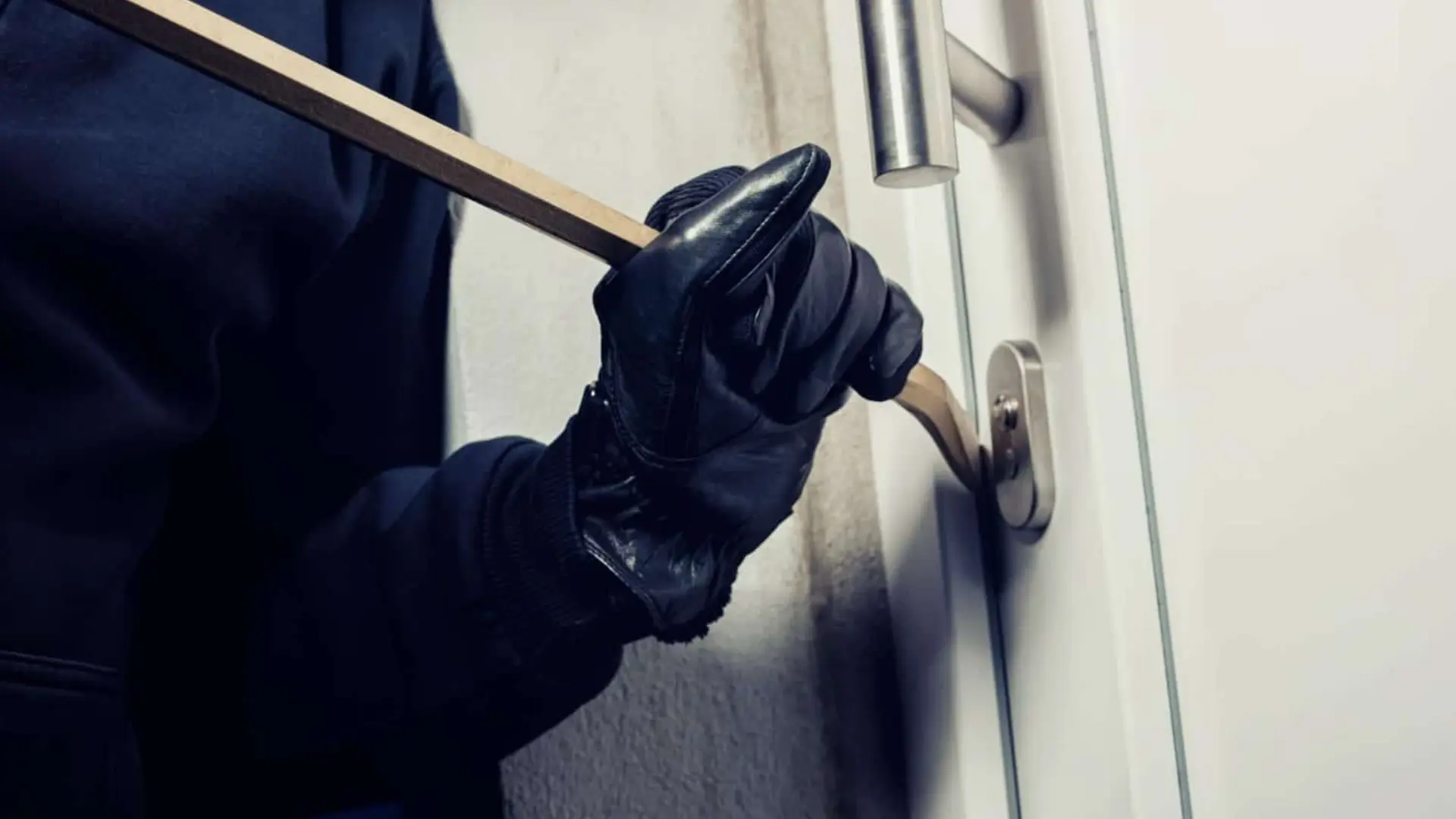
For many homeowners, the most troubling security concern is no longer discovering a break-in after returning to an empty house. It is the possibility of someone trying to enter while you or your family are still inside.
Recent incidents across Toronto and the GTA explain why that concern feels more immediate. Toronto Police reported a rise in home invasions in parts of the city earlier in 2026 and launched Project Aegis in the areas experiencing the greatest increases. In York Region, police warned homeowners after concealed cameras and battery packs were found outside residences in Vaughan. Investigators said the devices had been positioned to record homeowners’ routines before residential break-and-enters.
That does not mean residential crime is rising everywhere. York Regional Police reported a 25% decrease in residential break-and-enters during the first half of 2026 compared with the same period in 2025. Many break-ins are still crimes of opportunity. At the same time, recent investigations involving organized groups, property scouting and deliberate targeting show why homeowners should think beyond a camera that simply records what happened.
Modern home protection is increasingly built around layers. The objective is to make a property less attractive to approach unnoticed, detect suspicious activity earlier, slow forced entry, verify what is happening and create more time for an appropriate response. This is what we mean by the new standard of home protection. It is not a new Ontario law or mandatory code, but a more complete way of designing residential security.
Start With What You Can Improve Yourself
Before buying new equipment, take a careful look at the property you already have.
A useful home security review begins outside, preferably once during daylight and again after dark. Look at the house as if you were seeing it for the first time. Notice which entrances are visible from the street or neighbouring properties and which disappear behind fences, garages, landscaping or architectural features. A side yard that gives your family privacy may also give someone enough concealment to spend time near a basement window without being noticed.
York Regional Police recommends the same basic principles: maintain clear sightlines, trim landscaping that creates hiding places, improve exterior lighting, secure doors and windows and make the home appear occupied when you are away. These measures are closely related to Crime Prevention Through Environmental Design, or CPTED, which uses the physical environment to reduce opportunities for crime.
Strengthen Doors and Vulnerable Entry Points
Exterior doors should have solid frames, quality deadbolts and properly secured strike plates. Sliding doors should not rely only on the factory latch and can benefit from an additional physical blocking device.
Do not focus only on the front entrance. The door between an attached garage and the house, rear patio doors, side entrances and accessible basement windows may be less visible and therefore more attractive to an intruder.
In a 2026 York Regional Police investigation involving 20 residential break-and-enters across York Region and the GTA, suspects were reported to have entered homes through rear basement glass doors. That is a useful reminder that the entrance you use most often is not necessarily the one that deserves the most security attention.
Review Lighting and Visibility
Good exterior lighting helps remove concealed approaches to doors and windows, but brighter does not automatically mean safer. Look for dark areas along the sides and rear of the house, near gates and around accessible windows. Motion-activated lighting can be useful where continuous illumination is unnecessary, while timers and smart controls can help maintain the appearance of occupancy when you are away.
If cameras are already installed, check how lighting affects them at night. A powerful fixture positioned badly can create glare or exposure problems and leave a person’s face less visible rather than more. Lighting, camera placement and viewing angle should work together.
Test the Cameras You Already Have
Having several security cameras does not necessarily mean you have useful coverage.
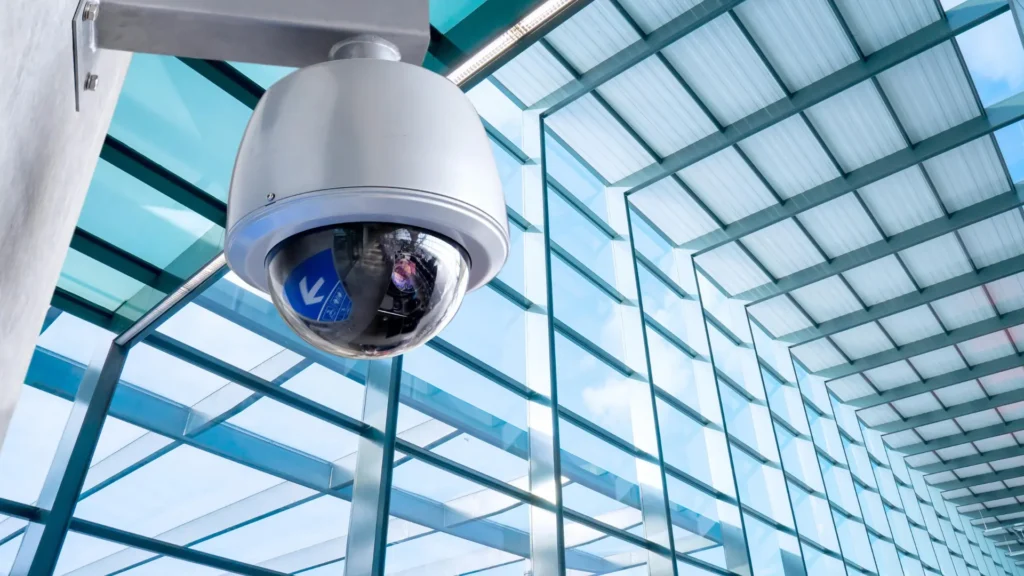
Open the live view after dark and look critically at the image. Can you recognize a face approaching the property, or only see a silhouette? Does the camera show the route toward the house, or does a person appear only after reaching the door? Are vehicles, walls, pillars or landscaping creating blind spots?
Camera height matters as well. A camera mounted very high may provide an excellent overview of the driveway while producing a poor facial image. The correct position depends on what that particular camera is expected to accomplish.
These simple checks cost nothing and often reveal weaknesses that can be improved before you consider additional equipment.
Modern CCTV Can Detect a Problem Earlier
Traditional residential CCTV is mainly reactive. It records an event so that you can review it later, provide evidence or understand what happened.
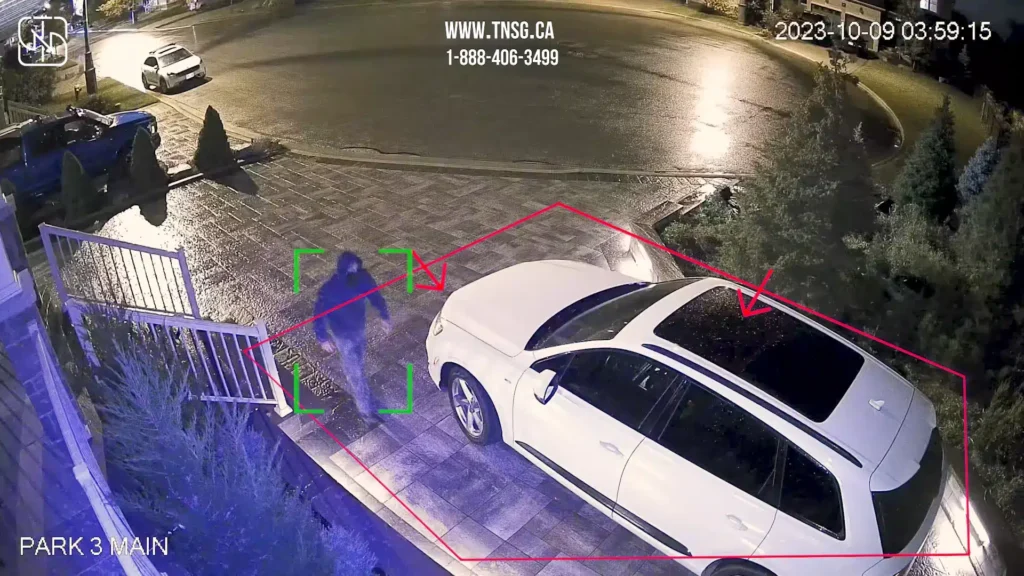
Modern active deterrence CCTV can move detection earlier. Depending on the equipment and configuration, AI-assisted video analytics can distinguish people and vehicles from other types of motion, monitor defined zones, detect line crossing and trigger a programmed response such as lighting, an audible warning, a notification or escalation to another part of the security system.
The useful innovation is the ability to understand more of the context around movement. A pedestrian walking along the public sidewalk is normal activity. A person leaving that sidewalk and entering a protected side passage at 2:00 a.m. is a different event. Someone approaching the front door in the afternoon may require no intervention, while a person remaining beside a garage window late at night may deserve attention.
A properly configured system can apply different rules to those situations instead of generating the same motion notification for everything it sees.
AI-powered home security does have limitations. A camera cannot determine criminal intent, and analytics can produce false positives or miss events because of lighting, weather, distance, obstructions or poor configuration. Its practical value is that it can help identify potentially important activity earlier.
For homeowners concerned about home invasions, that timing matters. If a system begins responding only when a door contact activates, someone has already reached the building. Detecting suspicious activity at the perimeter may provide an opportunity to assess the situation while the physical boundary of the home is still intact.
Physical Security Creates Time
Electronic security works better when doors and windows are difficult to defeat quickly.
Security window film can be useful for accessible glazed doors and windows, but it should not be described as making ordinary residential glass unbreakable. Properly selected and installed film is intended to help hold broken glass together and make rapid entry through the opening more difficult. Its effectiveness depends on the glass, film, frame and attachment method.
The same principle applies to doors, locks and frames. Physical reinforcement creates delay. Every additional second spent outside provides more time for occupants to recognize what is happening, for cameras and alarm sensors to generate useful information and for a monitoring service to assess the event.
This is why physical protection should be based on the weaknesses of the actual property. A heavily reinforced front entrance offers limited benefit if a concealed basement door remains easy to breach.
For homes with an unusually high risk profile, more specialized technologies can also be considered. Security fog cannons, for example, rapidly reduce visibility inside a protected area when activated. They are not appropriate or necessary for most homes, but may form part of a wider security strategy where there is a specific reason to use them.
A Good Alarm Should Provide More Than a Siren
A high-performance alarm system becomes more useful when different sensors and video work together.
A door contact tells you that an entry point opened. A glass-break detector may identify an attack on glazing. Interior motion detection provides another layer if someone enters the building. Video can show what was happening before and during those activations.
Combined, those signals can describe a sequence rather than a single unexplained event. A camera might first detect a person in a protected rear area, followed by a glass-break activation and then interior motion. Video associated with the event can provide additional information about whether a genuine intrusion is taking place.
This is also where 24/7 live video monitoring can add value. Recording and monitoring are not the same thing. A camera may record continuously without anyone reviewing the image in real time. With professional monitoring, qualifying events can be assessed according to the service and system configuration.
Why Video Verification Matters in Toronto
Toronto Police uses a verified response model for burglar alarm activations. Before police attendance is requested for a burglar alarm, the event must be verified. Accepted methods include video, audio, an eyewitness or activation of multiple alarm zones. Verified events are then handled according to their nature, priority and the police resources available at the time. Panic alarm activations are excluded from the same verification requirement.
This gives integrated video surveillance and alarm monitoring a practical purpose beyond convenience. Video can help provide context around an alarm rather than leaving a monitoring centre with a single unexplained sensor activation.
Professional monitoring cannot guarantee that police will arrive within a particular number of minutes. What a properly designed system can do is provide better information earlier in the response process.
What Does ULC Certification Mean?
Homeowners may also encounter terms such as ULC-certified, ULC Listed and professional monitoring when comparing security services.
In Canada, CAN/ULC-S301 and CAN/ULC-S302 apply to different parts of intrusion alarm installation, signal receiving and monitoring. An important distinction is that a company being ULC Listed does not automatically make every system it installs a ULC-certificated system. UL Solutions states that an individual system is considered a ULC system when an active certificate has been issued and maintained for it.
You do not need to learn the standards yourself. If ULC certification is presented as part of a security proposal, simply ask what specifically is certified.
Consider What Happens When Technology Fails
Security systems are normally demonstrated when power, internet and communications are working correctly. A good residential security design should also consider what happens when they are not.
Check whether your alarm panel has battery backup, whether cameras continue recording locally during an internet outage and whether important components rely on only one communication path.
This issue is worth considering because the methods used in residential crime are not always basic. During a 2026 York Regional Police investigation into an organized group connected to multiple residential break-and-enters, investigators recovered a radio-frequency jammer along with break-in tools and stolen property. Police did not state that the jammer defeated a particular alarm system, so the incident should not be interpreted as proof that wireless residential security is ineffective. It does, however, reinforce the value of considering redundancy when the risk justifies it.
Depending on the property, that may include battery backup, local video storage, hardwired components or secondary communications.
Why Your Own Home Can Be Difficult to Assess Objectively
There is a lot you can improve yourself, and you should. You understand your family’s routines, which doors are used most often, when the house is normally occupied and which areas already concern you.
At the same time, familiarity can hide weaknesses.
You may have walked past the same basement window for ten years and stopped noticing how concealed it is from the street. A camera above the garage may have had the same blind spot for so long that it feels normal. A side gate that is convenient in everyday life may also create a private route toward the backyard.
This is where a professional home security assessment adds value. A security specialist sees the property without years of familiarity and evaluates it from a different perspective. The assessment should not begin with the question, “How many cameras do you want?” It should consider how someone can approach the property, where they can remain concealed, which entry points are easiest to attack, what existing cameras can actually see, how physical barriers perform and what happens after an alarm activates.
At True North Security Group, this is how we approach residential security. The objective is not to replace every existing device or prescribe the same package to every homeowner. It is to identify meaningful gaps and determine which combination of physical improvements, CCTV, active deterrence, alarm monitoring and other measures makes sense for that particular property.
Two neighbouring houses may need very different solutions because their layouts, landscaping, entrances, existing systems and family routines are different.
What Layered Home Protection Looks Like in Practice
Consider a detached home in Vaughan with a driveway, narrow side passage, attached garage, backyard patio door and accessible basement windows.
Late at night, a person leaves the sidewalk and enters the property. A front camera detects the person, but ordinary movement remaining on the public sidewalk does not generate an unnecessary response. When the individual moves into a protected side zone, another camera identifies the event and an active deterrence function activates.
The person continues toward the rear of the house and attempts to breach a glazed opening. Physical reinforcement increases the time required to create an opening. The intrusion system generates additional signals while nearby cameras provide video of the developing event. If the home uses compatible professional monitoring, the available alarm and video information can then be assessed according to the monitoring service’s procedures.
No individual component guarantees prevention. The advantage comes from the sequence: suspicious activity is detected before entry, the person knows the property is protected, physical barriers create delay, the alarm identifies the attempted breach and video provides context for verification.
That is the difference between owning several security products and having a residential security system designed to work as a whole.
What Should You Improve First?
There is no universal first purchase because the answer depends on the house.
If a patio door can be forced easily, physical reinforcement may matter more than upgrading a camera. If the side of the property is dark and outside the view of existing CCTV, lighting and detection may be the first priority. If you already have good coverage but receive meaningless motion notifications throughout the day, better positioning or video analytics may provide more value than adding another device.
Start with the weaknesses you can identify yourself. Secure doors and windows, remove obvious hiding places, improve lighting, test cameras after dark, review what happens during an internet or power interruption and make sure everyone in the household understands how the alarm system works.
Then consider what you cannot confidently evaluate on your own. A professional assessment is useful when you want the home examined as one interconnected system rather than as a collection of cameras, locks and sensors.
Home Protection Should Begin Before Someone Reaches the Door
The most important development in modern residential security is not a particular camera model, an AI feature or another device connected to your phone. It is the ability to move protection earlier in the sequence of events.
A purely reactive system tells you that someone has already reached or breached the house. A layered system is designed to make the property harder to approach unnoticed, detect suspicious activity sooner, increase the effort required for forced entry and provide better information if an incident develops.
You can improve several of those layers yourself, and a careful review of your property is an excellent place to begin. If you want to understand the vulnerabilities that are harder to notice when you see the same home every day, True North Security Group (TNSG) can assess your existing security, identify vulnerable areas and recommend a solution based on your property and concerns.
Call us or complete the form below to speak with a security specialist.