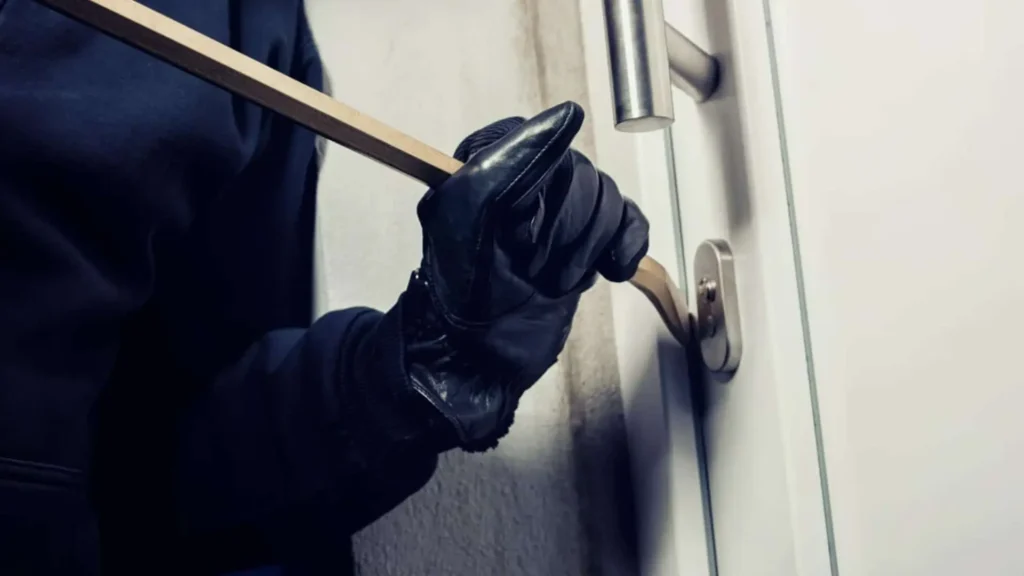
Shoplifting remains a concern for retail businesses across Toronto, the Greater Toronto Area and Ontario. Beyond merchandise losses, repeated theft incidents can disrupt daily operations, place additional pressure on employees and create safety concerns for customers and staff.
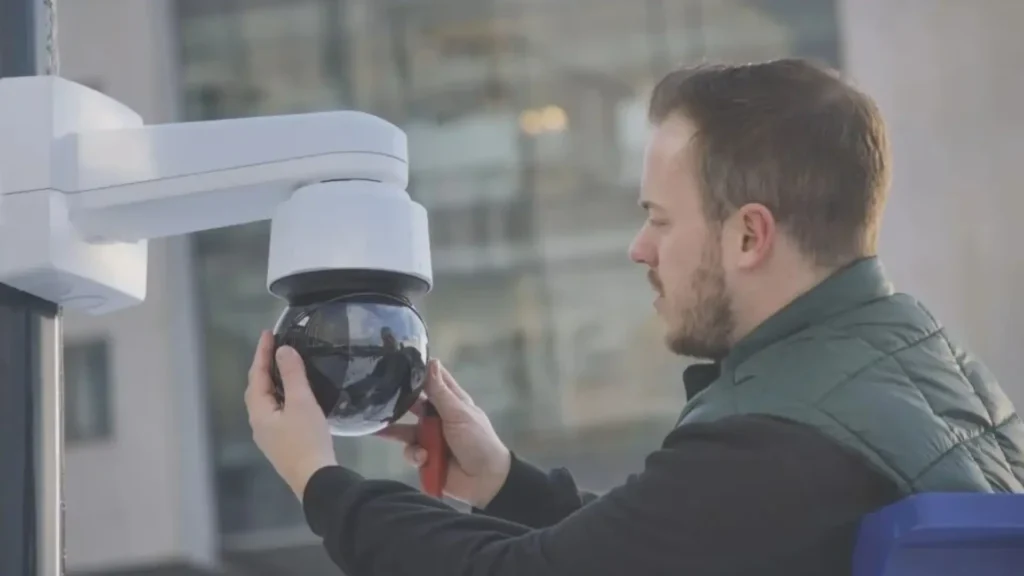
A well-designed CCTV system can help retailers monitor vulnerable areas, discourage some opportunistic theft and preserve footage for incident reviews. However, installing security cameras does not automatically prevent shoplifting. Their effectiveness depends on camera placement, image quality, monitoring arrangements and how the business responds to suspicious activity.
Understanding what CCTV can realistically accomplish helps retailers make better security decisions without investing in unnecessary technology.
Retail Theft in Canada: What the Latest Statistics Show
Retail theft continues to affect Canadian businesses. According to Statistics Canada, police reported 208,941 incidents of shoplifting involving goods valued at $5,000 or less in 2025. The rate increased by 11% compared with 2024, marking the fifth consecutive annual increase.
These figures represent incidents reported to police, not every theft committed in Canadian stores. They also do not establish the total financial cost of shoplifting, which can be difficult to measure separately from other inventory losses.
For retailers, the practical concern goes beyond national statistics. Theft risks vary according to store layout, merchandise, staffing levels, customer traffic and access to stockrooms or other restricted areas.
An effective prevention strategy should therefore begin with the conditions at the individual store rather than assumptions about how shoplifters behave.
The Role of CCTV in Shoplifting Prevention
Retail CCTV systems support several different security functions. Some are intended primarily to record incidents, while others provide live viewing, event alerts or integration with additional security equipment.
Deterring Opportunistic Theft
Visible security cameras may discourage some individuals from attempting theft, particularly when surveillance is clearly established and supported by other security measures.
Research into CCTV effectiveness has found modest overall crime-prevention benefits, although results vary by location and implementation. Systems combined with active monitoring or complementary security measures have generally demonstrated stronger results than cameras operating alone.
CCTV should therefore be considered one component of retail loss prevention, not a guarantee against theft.
Monitoring Activity in Real Time
CCTV allows authorized personnel to view activity across multiple areas of a store without being physically present in each location.
For example, staff may use live feeds to observe merchandise displays, entrances or checkout areas where visibility is limited.
However, recording video and actively monitoring it are different functions. A camera does not necessarily notify anyone when suspicious activity occurs.
Some systems support motion-based or analytics-based alerts, while professional monitoring services can provide additional oversight under defined operating procedures. Whether someone responds depends on the system configuration, monitoring arrangements and staff availability.
Recording Evidence for Investigations
When a theft occurs, recorded footage can help store management establish a timeline, review relevant activity and provide information to police or insurers when appropriate.
Footage may show how an incident developed, which areas were involved and whether other security measures were activated.
Its usefulness depends on factors such as viewing angle, lighting, resolution and recording quality. A camera positioned too far from an incident may capture movement without providing enough detail to identify the individuals involved.
Video recordings can support an investigation, but they do not automatically establish guilt, guarantee identification or determine the outcome of legal proceedings.
Where Should Retail Security Cameras Be Installed?
Effective camera placement begins with understanding how customers, employees and merchandise move through the store.
Entrances and Exits
Cameras near entrances and exits can document people entering or leaving the premises and provide useful footage when an incident is reported.
The required camera position depends on the entrance layout, lighting conditions and level of image detail needed. A wide overview may capture general activity but provide insufficient detail for identification.
Sales Floors and High-Value Merchandise
Retailers may prioritize displays containing frequently stolen or high-value products, particularly where shelving, fixtures or store layout create restricted sightlines.
Coverage should account for normal customer activity without unnecessarily recording areas unrelated to the security purpose.
Checkout Areas
CCTV can provide additional context for transaction disputes, suspected theft and incidents involving cash registers or self-checkout stations.
Where compatible technologies are available, video may also be linked to transaction events to simplify incident review. Such integration requires suitable equipment, software and configuration.
Stockrooms and Restricted Areas
Cameras at stockroom entrances, loading areas and other access points can help document unauthorized access or incidents involving merchandise movement.
These locations may also benefit from access control or intrusion detection, depending on how the business operates.
The objective is not to install cameras everywhere. It is to provide useful coverage of identified risks while respecting privacy and operational requirements.
CCTV Features That Matter for Retail Security
Not every store requires the same camera specifications or advanced features. The most useful system is one that provides the necessary coverage and reliable access to recordings.
High-Definition and 4K Video
High-resolution cameras can capture more visual detail, which may be valuable when reviewing incidents involving merchandise, people or transactions.
However, resolution alone does not determine footage quality. Lens selection, viewing distance, lighting, compression and camera positioning all affect what can actually be seen.
A properly positioned lower-resolution camera may provide more useful footage than a poorly positioned 4K camera.
Remote Access and Video Storage
Many modern CCTV systems allow authorized users to view live feeds and recordings remotely through supported applications.
Depending on the system, footage may be stored locally on a network video recorder, on a server, in the cloud or through a combination of storage methods.
Cloud storage can provide off-site access and, when correctly configured, help preserve recordings if local equipment is damaged or stolen. However, availability depends on the service, network connection, retention settings and other technical conditions.
Retailers should also consider cybersecurity, user permissions and backup arrangements when selecting connected surveillance technology.
Integration With Other Security Systems
CCTV can be more useful when combined with compatible security equipment.
For example, electronic article surveillance (EAS) systems can detect certain tagged merchandise passing through designated exits. Where integration is supported, a related event may help staff locate the corresponding video footage.
Similarly, intrusion alarms and access control systems can provide information that helps explain activity captured on camera.
These technologies serve different purposes, and integration does not mean that every event will be detected or prevented.
Can AI-Powered CCTV Detect Shoplifting?
Artificial intelligence is increasingly used in video surveillance, but its capabilities require careful explanation.
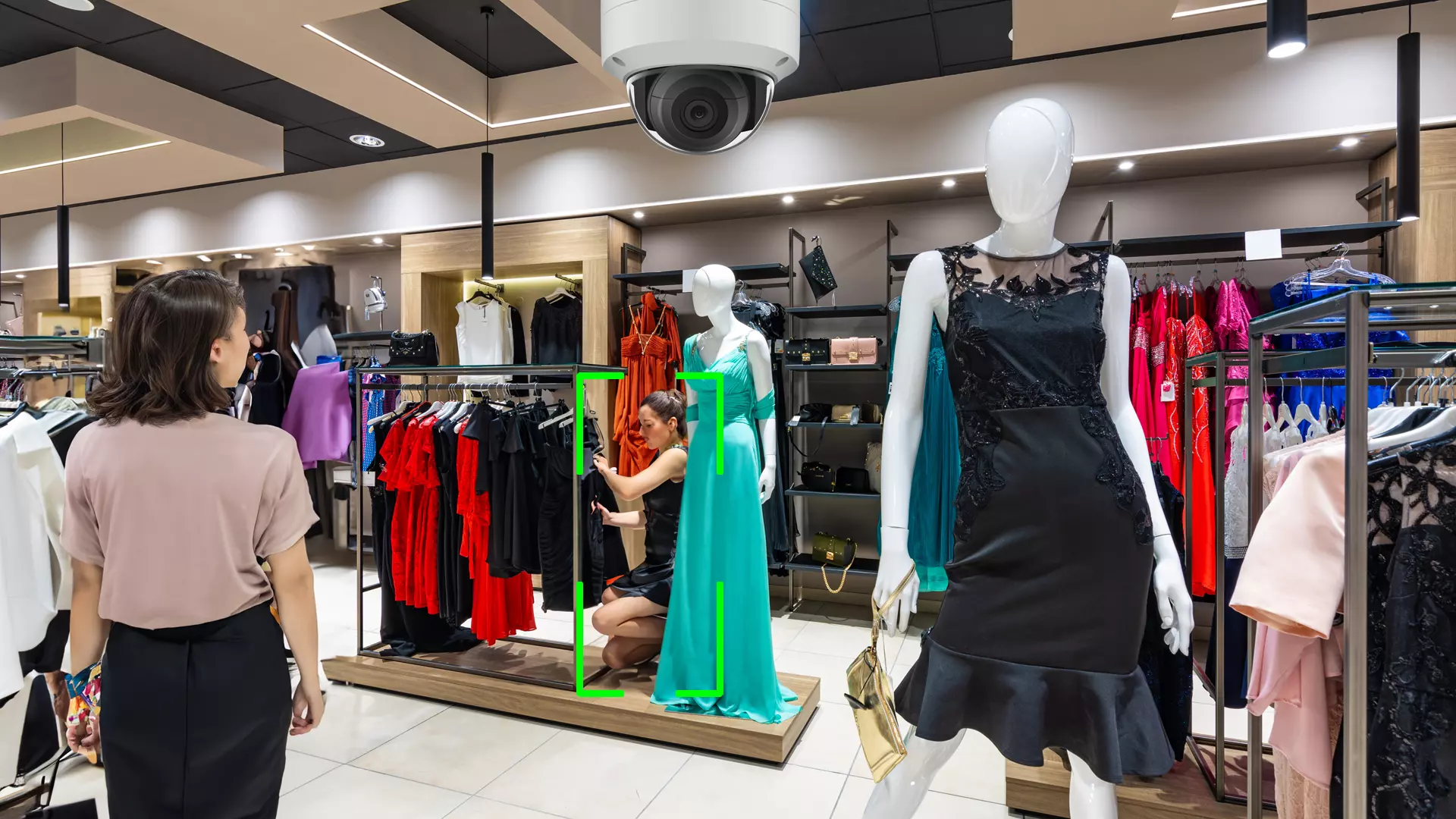
Depending on the hardware, software and configuration, AI-powered video analytics may distinguish people from vehicles, detect movement within designated zones, identify certain objects or generate alerts when predefined conditions occur.
More specialized retail analytics can examine movement patterns or identify unusual activity. However, unusual behaviour is not necessarily criminal behaviour.
AI cannot reliably determine a person’s intention to steal simply by observing their movements. Automated systems can produce false alerts, miss relevant events or misinterpret ordinary shopping behaviour.
For this reason, AI-generated alerts should be treated as information requiring appropriate human review, not proof of shoplifting.
Facial recognition is a separate and more privacy-sensitive technology. Its use may involve biometric personal information and requires careful assessment under applicable Canadian privacy laws. It should not be treated as a standard or automatically appropriate feature of retail CCTV.
For many stores, improving camera placement, recording reliability and incident response procedures may deliver more practical value than introducing complex analytics.
Privacy and Legal Considerations for Retail CCTV in Ontario
Security cameras in retail environments must be operated with appropriate consideration for customer and employee privacy.
Canada’s private-sector privacy requirements, including the Personal Information Protection and Electronic Documents Act (PIPEDA) where applicable, affect how organizations collect, use, protect and disclose personal information.
The Office of the Privacy Commissioner of Canada provides guidance for businesses operating visible video surveillance systems.
Retailers should establish legitimate reasons for surveillance, provide appropriate notification, limit camera coverage to necessary areas and restrict access to recorded footage. Recordings should be securely stored and retained only as long as reasonably required for their intended purpose or applicable legal obligations.
Cameras should not be directed toward washrooms, changing rooms or other locations where individuals have a heightened expectation of privacy. Audio recording requires separate consideration because it can raise additional legal issues.
Employee monitoring also requires attention. Under Ontario’s Employment Standards Act, employers with 25 or more employees in Ontario on January 1 must have a written electronic monitoring policy in place in accordance with the applicable requirements.
Retailers considering new surveillance capabilities should review their privacy obligations before installation, particularly when introducing biometric analytics or monitoring employees.
Best Practices for Reducing Shoplifting Risks
A useful CCTV system begins with an assessment of the store rather than a list of cameras to purchase.
Retailers can improve their security arrangements by reviewing several practical areas.
Review Camera Coverage
Walk through the store and identify locations where merchandise, entrances or transactions are difficult to observe. Check whether existing cameras provide usable images under normal operating conditions.
Maintain Recording Equipment
Regularly verify that cameras are functioning, recordings are being saved and sufficient storage is available. Image quality should also be checked after lighting changes, renovations or adjustments to merchandise displays.
Establish Staff Response Procedures
Employees should understand how to report suspicious activity, preserve relevant footage and escalate incidents safely. Theft prevention procedures should prioritize personal safety rather than confrontation.
Use Clear Surveillance Signage
Visible notices help customers understand that video surveillance is taking place and support transparency about the store’s security practices.
Combine CCTV With Other Measures
Inventory controls, appropriate merchandise placement, staff awareness, electronic article surveillance and controlled access to restricted areas can complement video surveillance.
The appropriate combination depends on the type of store, operating hours, merchandise and specific risks identified.
Frequently Asked Questions
Do CCTV cameras prevent shoplifting?
CCTV may discourage some theft attempts and help businesses review incidents, but cameras cannot eliminate shoplifting. Their effectiveness depends on coverage, visibility, monitoring and complementary security measures.
Does a retail CCTV system need professional monitoring?
Not necessarily. Some retailers primarily need reliable recording and remote access, while others may benefit from active monitoring during selected hours. The choice depends on operational requirements, available personnel and the response procedures the business can support.
Can an existing retail CCTV system be upgraded?
In many cases, existing cameras, cabling or recording equipment can remain useful. An upgrade may involve addressing coverage gaps, improving storage, replacing selected components or introducing compatible analytics. A technical assessment is needed to determine what can be retained.
A Practical Approach to Retail CCTV Security
Shoplifting prevention works best when retailers understand where their vulnerabilities exist and how different security measures can address them.
CCTV provides visibility, incident documentation and, where supported, opportunities for active monitoring. Its value depends on whether the footage is useful, the system remains operational and employees have clear procedures for handling security events.
For retailers across Toronto and the GTA, reviewing an existing camera system can be a practical starting point before investing in additional equipment.
True North Security Group designs and installs CCTV systems and commercial security solutions based on property requirements, existing infrastructure and operational priorities. If you are planning a new retail surveillance system or considering improvements to your current setup, contact TNSG to discuss your store and the next steps.